Crawlspace mold grows because bare or poorly covered soil releases moisture into the space year round, and that damp air rises into the rooms above. A full remediation cleans joists and subfloor, dries the space, and seals the ground with a vapour barrier, typically $2,000 to $8,000 depending on size, working height and drainage work.
Why Do Fraser Valley Crawlspaces Grow Mold?
Crawlspace mold is what happens when a house sits over damp ground in a region with a five-month wet season and a high water table. A huge share of the valley's older housing, especially 1970s and earlier homes in Mission, Chilliwack, rural Abbotsford, Langley and Maple Ridge, sits on crawlspaces with bare or minimally covered soil. Every winter, rain saturates the ground, the soil breathes moisture into the crawlspace air around the clock, and the cool space under your floor stays at high humidity for months. Wood framing that spends winters above roughly 20 percent moisture content will eventually grow mold, and joists, beams, subfloor and the paper on fibreglass insulation are all on the menu.
The part most homeowners underestimate: crawlspace air becomes house air. Warm air rising through the home (the stack effect) pulls replacement air up from below through gaps around pipes, ducts and the rim joist. A mouldy crawlspace quietly supplies musty, spore-laden air to the bedrooms above it, which is why the first symptom is so often a smell nobody can find.
How Does Water Get Into a Crawlspace?
Five routes, and only one of them is a dramatic event. The other four are slow and constant, which is why most crawlspace mold is discovered years after it started.
- Evaporation from bare soil. The chronic, invisible source. Even visually dry dirt releases litres of water vapour per day into an enclosed space.
- Poor surface drainage. Downspouts dumping beside the foundation, grade sloping toward the house, plugged perimeter drains. In heavy November rain, water simply arrives.
- Seasonal high water table. Low-lying areas of the valley floor can push moisture, or standing water, up into crawlspaces from below in midwinter.
- Plumbing leaks. Slow drips from supply or drain lines that nobody sees because nobody goes down there.
- Uninsulated ducts and cold surfaces. Condensation forming on cold metal and concrete during humid periods.
How Is Crawlspace Mold Remediated?
Clear out, clean, dry, then seal the ground and fix the water. The last step is the one that decides whether you are doing this once or every few years.
- Inspection. Moisture readings on framing, a map of visible growth, identification of every water source, and photos of what we find (most owners have never seen their own crawlspace).
- Clear-out. Contaminated insulation, fallen vapour barrier scraps, stored debris and any organic material on the ground come out in sealed bags.
- Contained cleaning. Growth is removed from joists, beams and subfloor by HEPA vacuuming and scrubbing, with abrasive methods for heavier colonization. Workers use full protection; the space is isolated from the house during work.
- Drying. Commercial dehumidification brings framing back to safe moisture content, verified by meter.
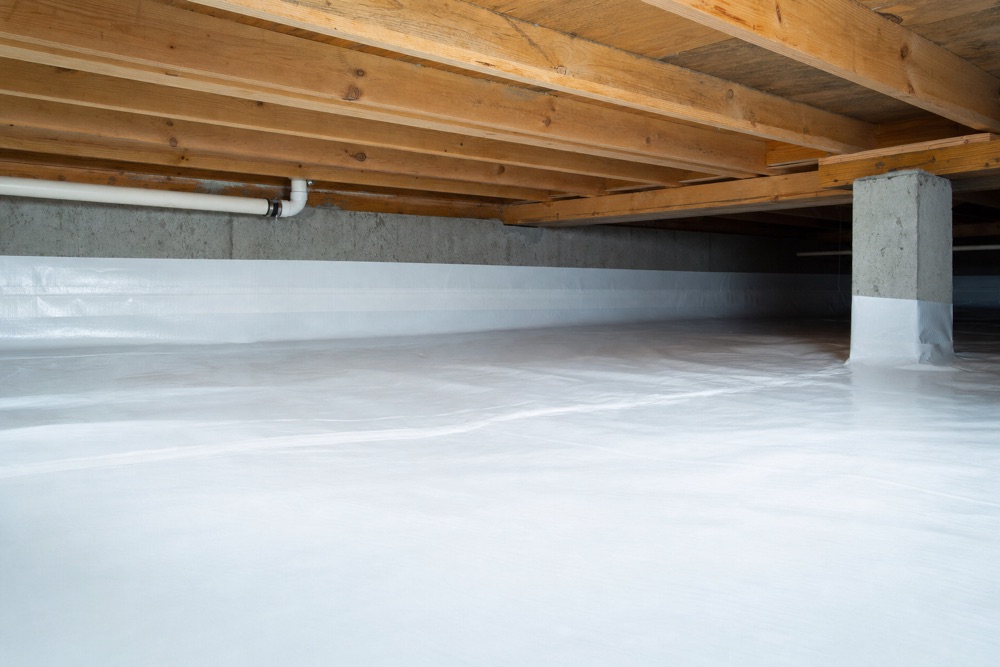
- Moisture control, the part that makes it permanent. A sealed ground vapour barrier (heavy polyethylene, overlapped and taped, run up piers and walls as appropriate), downspout and grading corrections, and a ventilation or mechanical drying strategy matched to the space. Where insulation is replaced, we do it once the space is dry.
- Documentation. Before and after photos and moisture readings, useful for your records or a future sale.
How Much Does Crawlspace Mold Removal Cost?
Most full crawlspace remediations in the region land between $2,000 and $8,000. The variables are the footprint, working height (an 18-inch crawl costs more per square metre than a four-foot one), the amount of contaminated material to remove, and how much moisture control the space needs. A modest, accessible crawlspace needing cleaning plus a vapour barrier sits near the lower half of the range. If you are getting multiple quotes, compare the moisture-control scope line by line; it is where cheap bids quietly cut the part that matters.
When Should You Check Your Crawlspace?
Any of the following is reason enough, and if it has been more than a year since anyone opened the hatch, that is reason enough on its own.
- Musty smell on the main floor that worsens in winter or in rain
- Cupping or lifting hardwood, or cold damp-feeling floors
- Allergy symptoms at home that ease when you leave
- Visible fuzz or staining on joists during a furnace or plumbing visit
- A home inspector's note in a purchase you're considering, our real estate inspections can put numbers on it fast
- Standing water under the house at any time of year, also see post-flood cleanup
A crawlspace check takes us under an hour, and it is included in any whole-home mold inspection. If yours turns out to be dry and clean, that is a good afternoon for everyone, and you will know rather than wonder.
Crawlspace Mold FAQs
How do I know if my crawlspace has mold?
The most reliable early sign is a musty smell in the rooms above, because a large share of the air in your living space rises from the crawlspace through gaps around plumbing and ducting. Confirmations include white, green or black fuzz on floor joists and subfloor, damp or sagging insulation, standing water or damp soil, and cupping hardwood floors above. If you have not looked in over a year, it is worth a flashlight check or an inspection.
How much does crawlspace mold removal cost?
Typical Fraser Valley crawlspace remediations run $2,000 to $8,000. Cleaning growth from joists and subfloor in an accessible crawlspace sits at the lower end. The upper end includes removing fallen insulation and debris, treating extensive growth, and installing a proper ground vapour barrier and drainage or ventilation improvements. Access height is a big price driver, and firm quotes come after a look, not after the work.
Does a dirt-floor crawlspace always need a vapour barrier?
Effectively yes, in this climate. Bare soil releases moisture into the crawlspace air continuously, even when it looks dry on the surface. A sealed polyethylene ground cover is the single highest-value moisture improvement in most older Fraser Valley crawlspaces, and skipping it is why many past cleanups failed.
Should crawlspace vents be open or closed?
It depends on the season and the crawlspace, which is why the old advice of "just add vents" so often fails here. In our humid winters, outside air carries plenty of moisture, so venting alone rarely dries a wet crawlspace and can make it wetter in shoulder seasons. The durable fix is sealing the ground, managing drainage, and then choosing ventilation or mechanical drying based on how the space actually performs. We measure rather than guess.
Can crawlspace mold make the house above unhealthy?
Yes. Crawlspace air does not stay in the crawlspace: pressure differences push it up into living areas through floor penetrations, a phenomenon called the stack effect. Musty crawlspace air, spores and dampness end up in bedrooms above. That is why crawlspace mold is worth fixing even though nobody lives down there.
My insulation is falling down and stained. Does it all need replacing?
Sagging, compressed or mould-stained fibreglass batts in a crawlspace ceiling have usually absorbed moisture and lost much of their value, and they often hide growth on the subfloor behind them. In most remediations, affected batts come out with the cleanup and are replaced (or the insulation strategy is rethought) once the space is dry. We will tell you honestly which sections can stay.