A mold inspection in the Fraser Valley typically costs $200 to $400 and takes 60 to 90 minutes on site, covering visible growth, moisture mapping, and the attic and crawlspace. Lab air sampling adds roughly $100 to $150 per sample, and only earns its cost when growth is hidden, disputed, or being verified after remediation.
What Does a Mold Inspection Actually Tell You?
A professional mold inspection answers three questions: is it mold, how far does it go, and what moisture problem is feeding it. The visible patch is usually the smallest part of the story. Mold grows wherever moisture and organic material meet, which in a Fraser Valley home means the paper face of drywall, wood framing, attic sheathing, subfloor and the dust that settles in cool corners. By the time a spot appears on the painted surface, growth on the hidden side is often several times larger.
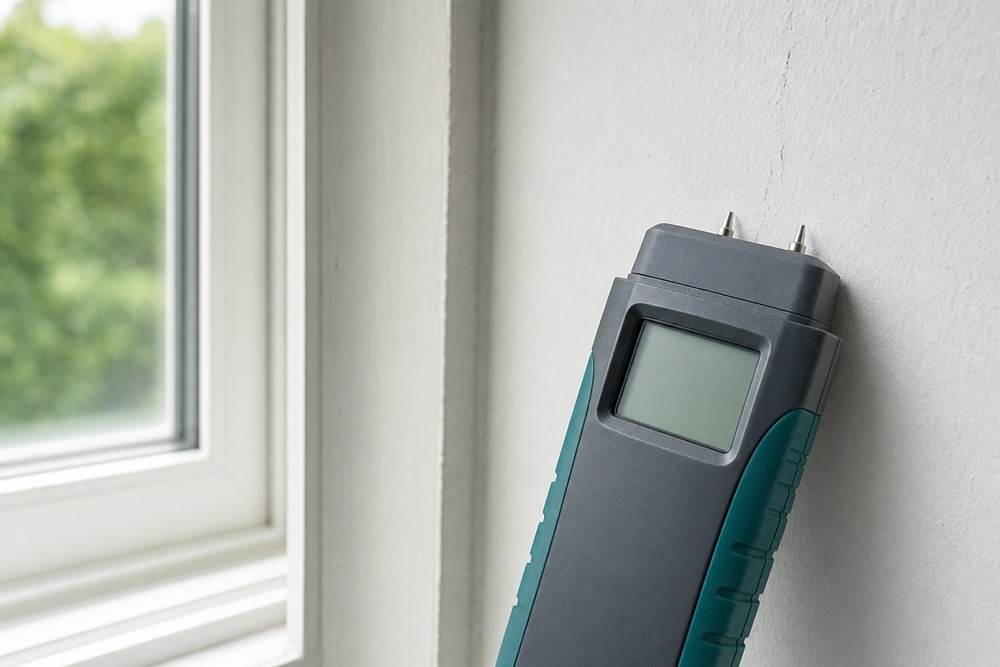
That is why a good inspection is really a moisture investigation. We check the places this region's climate attacks first: window frames and north-facing walls where winter condensation collects, bathroom and kitchen ceilings, the attic hatch and roof sheathing, the crawlspace, and any wall that backs onto a shower, laundry or exterior grade. Moisture meters and thermal imaging show damp materials before anything is opened up, so the report you get maps the actual problem, not just the symptom you happened to notice.
Inspection, Air Sampling and Surface Sampling: What's the Difference?
These terms get blurred together, and paying for the wrong one wastes money. Here is the honest breakdown:
- Visual inspection with moisture tracing. The core service. A trained eye plus moisture readings finds most problems and is enough to scope a remediation. If you can see mold, you rarely need to pay a lab to confirm that it is mold.
- Air sampling. A calibrated pump draws a known volume of air through a spore trap, and an accredited lab identifies and counts what it catches. Indoor results are compared with an outdoor baseline taken the same visit. This is the right tool when you smell mold but cannot see it, when someone in the house has unexplained symptoms, or when you need documented proof for a purchase, a landlord dispute or an insurance file.
- Surface sampling. Tape lifts or swabs of visible growth, lab-identified. Useful when a report needs to name the genus (for example in a tenancy or insurance dispute), and for clearance verification after remediation.
| Service | Typical Fraser Valley price | What you get |
|---|---|---|
| Visual inspection with moisture tracing | $200 to $400 | 60 to 90 minutes on site, verbal findings same day, written report in one to two business days |
| Air sample (per sample, lab analysis included) | $100 to $150 | Spore counts compared against an outdoor baseline taken the same visit; results in two to three business days |
| Surface sample (tape lift or swab) | $100 to $150 | Lab identification of visible growth, used for disputes and clearance |
| Post-remediation clearance testing | Inspection fee plus samples | Independent verification before walls are closed, including on another company's work |
Indicative Fraser Valley pricing as of August 2026, confirmed in writing before booking. Inspection fees are credited toward remediation if you hire us for the cleanup.
When Is Mold Testing Genuinely Worth Paying For?
Testing is worth paying for in six situations, and they all share one feature: the answer is not already visible. Health Canada's own guidance is that in most cases there is no need to measure mold concentrations or identify the species, because the required action does not change.
- Buying a home: a musty basement or a stain on attic plywood during a viewing deserves real data before subject removal. See our real estate inspection service for deal-timeline turnarounds.
- Unexplained symptoms: allergies, congestion or asthma that improve when you leave the house point to an indoor air problem worth measuring.
- Musty smell, no visible source: sampling narrows down which room the source is in before anyone cuts drywall.
- After a flood or major leak: confirming that drying actually prevented growth, especially inside wall cavities. Related: post-flood mold cleanup.
- After any remediation: a clearance test verifies the contractor's work before walls are closed. We provide independent clearance testing on other companies' remediations.
- Tenancy disputes: documented, lab-backed results carry far more weight than photos alone.
What Happens During the Inspection Visit?
A typical single-family inspection takes 60 to 90 minutes and follows the same six steps every time, starting with your history of the problem and ending with a written report.
- Interview. When the smell or stain appeared, what leaks or floods the house has had, who is experiencing symptoms and where. History narrows the search fast.
- Room-by-room survey. Visible growth, staining, condensation patterns, ventilation performance (including whether your bathroom fans actually move air, and where that air goes).
- Moisture mapping. Meter readings on suspect walls, floors and ceilings; thermal imaging where hidden dampness is likely.
- Attic and crawlspace check. The two places Fraser Valley mold hides most, and the two places homeowners look last.
- Sampling, if warranted. Only with your agreement and a clear reason, never as a default upsell.
- Report. Written findings with photos, the moisture cause, a remediation scope if one is needed, and prevention steps specific to your house. Lab results are appended when samples were taken.
Does It Matter Which Species of Mold You Have?
For deciding what to do, no. Health Canada's guidance is refreshingly practical: it does not matter which species you have, indoor mold growth should be removed and the underlying moisture corrected, and the health precautions are the same either way. A report that names a species but not the leak behind your shower valve has told you the trivia and skipped the substance. Our reports lead with the cause, because in this climate the cause is what decides whether mold returns next winter.
In practice, Fraser Valley moisture problems fall into a handful of buckets: winter condensation from cool surfaces and limited ventilation, bathroom exhaust venting into the attic, ground moisture rising through an unsealed crawlspace, plumbing and envelope leaks, and one-time flooding events. Each has a different fix, and each fix has a different cost. Knowing which bucket you are in is worth far more than a lab certificate on its own.
Can You Do the Testing Only, Without the Removal?
If you want testing only, that is a complete service: you get the report and take it to any remediation contractor you choose, with no obligation to us. If you later hire us for the removal, we credit the inspection fee toward the job. Either way, the findings are documented so any competent contractor can price from them.
Frequently Asked Questions
Do I need mold testing, or just an inspection?
Most homeowners only need an inspection. A trained inspector can identify visible mold, trace the moisture feeding it and scope the fix without lab work. Testing (air or surface sampling with lab analysis) earns its cost when mold is suspected but not visible, when a real estate deal needs documented evidence, when a landlord or insurer wants proof, or when you need confirmation that a remediation actually worked.
How much does a mold inspection cost in the Fraser Valley?
A visual inspection with moisture readings typically runs $200 to $400 for an average home in this region. Air sampling adds roughly $100 to $150 per sample with lab fees, and most homes that need sampling need two to four samples (including an outdoor baseline). We quote the full price before booking, and inspection fees are credited toward remediation if you hire us for the cleanup.
What does an air quality test for mold actually measure?
An air sample pulls a measured volume of air through a collection cassette, and a lab counts and identifies the mold spores caught in it. Your indoor counts are compared against an outdoor baseline sample taken the same day. Indoor counts meaningfully higher than outdoors, or dominated by species associated with wet building materials, indicate an indoor mold source even if you cannot see it.
Can you find mold behind walls without cutting them open?
Often, yes. Moisture meters and thermal imaging locate damp areas behind drywall, and air sampling can confirm elevated spore levels in a room with no visible growth. When those signs point to a hidden problem, a small, deliberate inspection opening beats discovering the full extent mid-renovation.
How long does an inspection take and when do I get results?
A typical single-family home inspection takes 60 to 90 minutes on site. You get verbal findings the same day and a written report within one to two business days. When lab samples are involved, results usually add two to three business days, with rush options for real estate deadlines.
Is a musty smell without visible mold worth inspecting?
Yes. That odour is produced by actively growing mold releasing microbial volatile organic compounds, so a persistent musty smell almost always means live growth somewhere: under flooring, behind a vanity, in a wall cavity or in the crawlspace below. Smell with no visible source is one of the strongest reasons to book an inspection with sampling.